Archive for the "reduce this" category

How can I reduce my use of make-up sponges etc?

We’ve had an email from Charley:

I’ve read your pages about reducing toilet paper and sanitary towels. I’m not sure I want to go that far yet but I do want to find an alternative for makeup sponges like for applying liquid foundation. Do you know if there are any recycled sponges on the market or what else can I use?

I’m hoping we’ve got some make-up experts in the Recycle This community — I’ve only worn foundation twice in my entire life so I don’t know much about that sort of thing. It’s an evasive answer but that is one way to reduce using synthetic sponges/foam pads – and other make-up consumables such as packaging: wear less make-up and less regularly. I realise it’s not an answer for everyone but it is something to consider. I think I used to wear make-up out of habit but once I got over the shock of going cosmetically nude, I quickly normalised to not wearing make-up.

Now to Charley’s actual question: with Google, I can find sponge scourers make from recycled but not finer make-up sponges. Anyone got better Google skills or with more cosmetics knowledge, know where/what to look for? You can get natural sponges for applying make-up (which could be composted at the end of the life) but they usually have their own environmental impact. Anyone got any advice on those?

Alternatives: again, possibly not for everyone but switch to a powder foundation that can be applied with a brush – a good quality brush washed regularly will last a long, long time. (On a similar point, I can’t believe I stuck with sponge eye shadow applicators for so long — trained into them by the “free” ones with some shadows I guess — when a shaped brush does a far better job and lasts a lot longer too.)

I know a lot of people make their own make-up removal pads to use instead of cotton wool but has anyone made their own reusable application pads?

Any other suggestions or ideas for Charley to try?


How can I reduce the amount of NEW books I buy or pass on my old ones?

We’re having a book themed week here on Recycle This – and on my simple living site, The Really Good Life too. Read about how to reuse, recycle or upcycle old books, damaged books and notebooks/jotters – and see inspiring how-tos & ready-to-buy items using books. Or on TRGL, read about my favourite simple living/growing/making/cooking books – and give me your suggestions for simple living/growing/making fiction (please!)

As good greenies, we all know that it’s better to REDUCE in the first place before having to think about reusing or recycling so I thought I’d ask a quick “reduce” question — how do you reduce the amount of new (as in brand new, just printed) books you buy? Any tricks to avoid the temptation or favourite ways to buy them second(third/fourth)-hand?
If you don’t buy books in general, but still read regularly, how do you do that?

And if you do buy books, how do you pass on your old ones so that others can enjoy them too?

I suspect some of these answers are obvious – for example, I use our local library regularly and also browse the shelves in charity shops* – but I wondered if anyone had any less common ideas that might be new to other people. I only recently discovered Abebooks – I wonder if there are any other gems I’m missing out upon!

Let us know your book-buying/acquiring secrets in the comments below!

* in that order: if I go to the library before any shopping expeditions, the “I need new input” urge has already worn off a bit and my bag is generally pretty full/heavy so I want to browse and definitely buy less stuff. Libraries are fab!


Advice for arguing against plastic credit-type cards instead of card cards?

I’m possibly a bit late with this now (sorry Su!) but I just spotted this question and wondered if anyone had any advice/info/suggestions for further research.
Good friend of Recycle This and The Really Good Life Su asked:

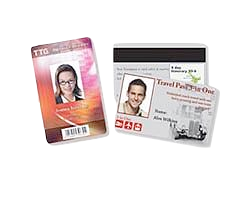
Next week I am at a conference all week. One of the motions for discussion (which is supported) is about replacing union reps and H&S reps existing card cards with plastic credit card type. If this motion actually gets discussed (it probably won’t get prioritised) I intend to speak against the motion.

However, I need as much ‘ammunition’ as possible and wondered if anybody knew anything about the emissions released during manufacture, how long if ever, they take to degrade & anything else that might be relevant. Call this pre-emptive reducing!

I know that most credit cards are made from PVC which is hard to recycle, doesn’t readily breakdown and releases nasty chemicals if burned and during its manufacture – Greenpeace want PVC restricted/banned, as it already is in some European countries. It is possible (just a bit more expensive) to have credits cards made from PET (plastic code 1) — that’s a lot more widely recycled but still obviously uses resources in its manufacturing.

A bit of digging turned up this story from Slate magazine in 2009, which says about PVC cards:

It takes about 4.25 grams of petroleum to manufacture one 5-gram credit card. Multiply that by 1.6 billion — the number of credit, debit, and ATM cards produced in America in 2007 — and we’re looking at roughly 45,000 barrels of oil a year just to make the plastic that feeds our late-night eBay sprees. Granted, that’s a drop in the bucket compared with the 20 million barrels Americans consume daily. But those figures don’t include the billions of gift cards, loyalty cards, and store charge cards we stuff in our wallets each year.

And apparently:

In addition [to the petroleum], a variety of laminates, inks, dyes and other chemicals are used in their production.

Anyone else got anything else Su could use?


How can I reduce my use of single serving milk pots?

We’ve had an email from Leann:

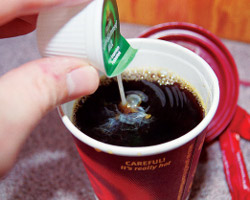
I have to travel a lot to work and in a day can easily get through a dozen single serving milk pots – on the train, at meetings, at hotels etc. I’m not interested in recycling them, I want to stop needing to use them! Any ideas?

Good question and it is much better to reduce rather than recycle so hopefully we’ll be able to help you with some ideas.

You could take some of milk from home with you in a little bottle – depending on the temperature, that might only be good for the outward journey — it might be like adding butter to your drinks later in the day! In the winter it’ll last longer though – and if your room is without mini-bar/fridge, don’t forget the old student/frugaleer tricks of leaving bottles of milk in a sink filled with cold water or out on a window sill.

If it ripens too quickly like that, dried milk powder or “non-dairy creamer” (Coffee mate etc) may be an alternative since they won’t go off – some milk powders need reconstituting first though so that might be a bit of a faff on the train.

It might be easiest to find a type of tea/coffee that you can enjoy without milk – for example, a lighter black tea (Earl Grey for example) if you’re not into fruit/herbal teas — then that would avoid the milk question altogether. Carrying your own tea bags around is pretty easy since they’re small and lightweight – and it would probably look less odd in a meeting if you whipped out a preferred teabag rather than milk powder and a whisk.

Any other suggestions for Leann?


Plastic-free and aerosol-free cleaning – how do you do it?

This week, we’ve had a vaguely spring cleaning inspired week here on Recycle This and looked at a few cleaning related questions – so far, reusing/recycling bleach bottles, making homemade dishcloths/pot scrubbers, and reusing/recycling air fresheners. Today though, I’d like to hear your tips and suggestions for reducing waste from cleaning – for going plastic-free and aerosol-free.

Plastics seem to be a core part of modern cleaning products now – from the cleaning solution bottles to the sponges, the film the sponges are wrapped in, many mop buckets and dustpans and brush sets. The latter things may last a while but the former are likely to end up in the bin very soon. Some bottles can be recycled but the sponges and any film-type packaging can’t be. Even more traditional eco-friendly cleaning solutions such as vinegar often come in plastic bottles these days (or at least they do if you bulk buy them).

Similarly, plastic pump-action spray bottles have replaced some cleaning product aerosols but they’re still very common for polishes & foaming sprays (such as oven cleaner) — and aerosol recycling is not exactly common. (They can be recycled and some areas do collect them kerbside, but most don’t.)

Have you made any efforts to reduce the amount of plastic waste generated due to cleaning? Have you swap to different products to reduce plastic packaging waste? We’ve talked about making dishcloths/scrubbers – but any other suggestions for reducing the use of plastic sponges?

And what about aerosols? Have you got any advice for moving away from them?