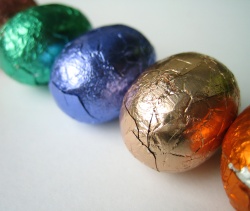
 Unless you’re very good and don’t eat every scrap of chocolate as soon as it passes the threshold of your home, I think we’re about a week late on this one. But anyway…
Every year we ask people likely to buy us Easter eggs not to buy us Easter eggs but we still end up with one or two, and the packaging makes us want to cry.
I have been known to wear the cardboard bit as a hat (photos available on request) so that’s that dealt with, but what can be done with all that molded yet flimsy plastic nonsense?
Best Suggestions
- Reduce: Buy/make smaller solid chocolate instead of fragile eggs that need that packaging.
- Reuse: The more sturdy plastic cases can be used as paint/glue dishes during kids’ art sessions or decorating.
- Recycle: Check the packaging to check which type of plastic it is. Most of the plastic is PET/PETE – No 1 in a triangle – one of the most commonly recycled plastics.
- See the comments below for more suggestions and ideas
(Photo by Vierdrie, c/o sxc.hu)
Categories: Easter, food, items, packaging
Posted by louisa
on 27 April 2006
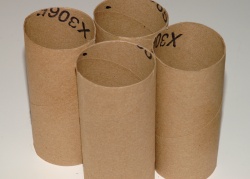
Oh, I know. How very Blue Peter. Except we don’t have very much need for a model of Tracy Island.
We don’t use kitchen rolls that much so mostly have the shorter toilet roll-size tubes lying around the place.
Short of just recycling them in our green bin, what are the alternatives?
Best Suggestions
- Reduce: Look for toilet rolls with more sheets per rolls and if you’re really keen, swap to washable clothes for post-wee wipes :)
- Reuse: Use them as pots for seedlings – put a little scrunched up newspaper in the bottom and fill with soil. The seedlings roots can grow through the wet cardboard when needed so you can just plant on the pot as is.
- Recycle: Cardboard can be recycled through many local recycling schemes but can also be put on the compost heap/in wormeries – great for soaking up excess water. Alternately, fill them with scraps of paper, wood and/or pinecones and use them as firestarters.
- See the comments below for more suggestions and ideas
Categories: bathroom, items, packaging
Posted by louisa
on 26 April 2006
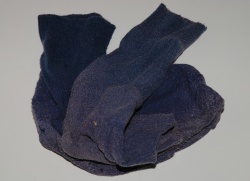 John’s socks have a tendency to
a) stretch to about seven foot in length
b) go hard and strangely crunchy
c) go missing
Mine hole at the heel and toe, lose all elasticity around the ankle then drain of colour.
When they’ve gone past the not-even-on-washing-day-when-every-other-sock-is-dirty stage, we usually just throw them in the dirty rag bag for using when something gross needs cleaning up. But even with all the gross (feline-related) things that happen in our house, we still have a huge stack of odd and broken socks.
Ideas?
Best Suggestions
- Reduce: If you can afford them, buy good quality socks to start with – they’ll last a lot longer – keeping their shape and colour – and save money/resources over all. Fix small holes when they appear too – it’s a lot easier and neater to fix smaller ones than big ones.
- Reuse: Socks are perfect for cleaning rags – slip a old sock over your hand and use it as a duster.
- Recycle: If they’re clean, they can be shredded and used as stuffing in toys and draft excluders.
- See the comments below for more suggestions and ideas
Categories: clothes and fabric, items
Posted by louisa
on 25 April 2006
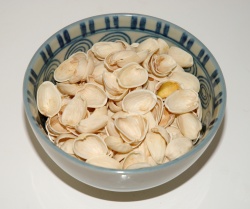 Oh lovely pistachio nuts. How sweet and salty your squishy insides are. How tough and protective your hard outsides are.
We’ve got a whole bowlful of the pistachio nut shells with no idea what to do with them.
We’re reluctant to just throw them on the compost heap because it seems such a waste to just ask them to rot down again (and they’ll probably take ages anyway) but that’s a last resort I guess.
Any ideas?
Best Suggestions
- Reuse – Practical: Use them at the bottom of plant pots to help drainage.
- Reuse – Creative: They can be made into rattles (in an old tin can or cardboard tube depending on how loud you want it) or instead of seashells wind chimes.
- Recycle: Smash them up a bit and spread them around the garden – to start with, the sharp edges will deter slugs and snails and eventually the shells will break down into compost and feed your soil.
- See the comments below for more suggestions and ideas
Categories: food, items, packaging
Posted by louisa
on 24 April 2006