Archive for September, 2010

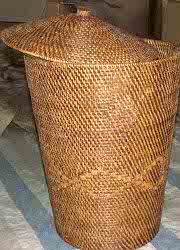
How can I reuse or recycle a wicker washing basket?

Over on the Suggest an Item page, Cate B asked:

I have an old ali baba wicker laundry basket that is unravelling itself after years of use. Do you think I could grow potatoes in it and would I have to line it to stop soil falling out?

If the wicker is made from natural fibres, I imagine that it would start to rot pretty quickly once it was filled with wet soil — I had a purpose-bought, plastic-lined wicker hanging basket a few years ago and that fell apart after two years max, in the garden – and that was designed to be outside and hold wet soil.

I probably wouldn’t be much more willing to use it if it was made from synthetic fibres either: plastic for outdoor use is treated to be resistant to UV rays, else it discolours & starts to break down – and I’m not sure I’d want plastic breaking down that close to my food.

On the flip side though, if you can grow your potatoes in something else, you could use the wicker basket for storing them – brush off any damp soil and leave them in the open to dry off excess surface moisture for a couple of hours, then they can be stored in the wicker basket in a cool, dry part of your house. The wicker will let excess moisture to escape unlike a solid container.

Has anyone tried growing potatoes in an old washing basket?

Or does anyone have any reusing or recycling ideas for one?


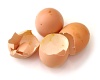
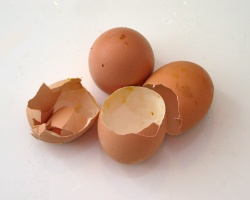
5 fantastic reuses: what to do with egg shells

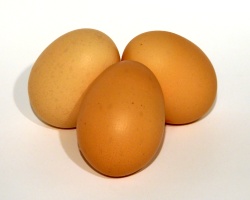
We’ve had loads of really good suggestions for what to do with egg shells over the years but here are some of my favourites:
1. Feed them back to your chickens (or lizards, or dogs…)
Eggs shells contain a considerable amount of calcium – they’re 95% calcium carbonate, with the remaining 5% being a binding protein to hold the shell together – so they can be used as a useful mineral supplement for birds, reptiles or animals.

To feed them back to chickens, bake them in a hot oven for about half an hour then crush them into small grit-sized pieces. Bake them while you’re cooking something else to be more energy efficient – it kills bacteria, makes them easier to crush and changes the taste so are less likely to encourage the hens to peck their fresh eggs. The hens will reward you by recycling the old broken egg shells into fresh new eggs!

The same baked crushed shells can be added to the food of egg-laying reptiles (same principle as chickens) but for dogs on raw food diets, most people simply blend/crush a whole fresh egg in with the dog’s other food every now and then as a calcium boost.

2. Use them for cleaning
Again, baked and crushed, they can be used as a mildly abrasive, natural way to clean stains off the insides of bottles, flasks, vases, or other hard to clean things. Place a couple of tablespoons of crushed egg shells in the container, add water, then shake, baby, shake! The egg shells should help remove stains from tea & coffee or wine, without scratching the much harder surface. After you’re done, you can tip the shelly water into your compost (see #5).
3. Make your own Sterno/heating fuel
Again, taking advantage of all that calcium, you can turn egg shells into homemade Sterno – a long-burning heat sauce made from jellied alcohol, used instead of tealights to keep food warm or as a camping stove fuel. Full instructions on how to make it can be found on the Zen Stoves website (along with advantages and disadvantages of using Sterno as a cooking/heating method).

4. Turn them into chalk – or other pieces of art
If that’s a bit too much like a chemistry experiment for you, how about just making them into floor chalk instead? It’s a pretty easy thing to do – perfect for kids as it doesn’t involve stabbing instruments or flames.

5. Use them in the garden
Roughly crushed egg shells have traditionally been used as a slug deterrent in the gardens – the theory is if you sprinkle a circle of shell around plant stems, slugs won’t cross the sharp rough surface to get to your precious plants. It’s very much more of a deterrent than an eradication measure though and while some people swear by it, other people just swear at the continued loss of their lovely hostas.

Egg shells can also be added to the compost heap – whole shells take ages to break down but crushed ones disappear into the general matter very quickly.

More reuses or recycling ideas for egg shells…


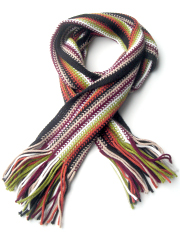
How can I reuse or recycle wooly winter scarves?

Brr! For few days last week, it felt like we were getting a last minute reprieve from summer’s sayonara but now it feels very autumnal indeed. I guess it’s time to shift into winter mode – I’ve got a list of insulating chores to complete, the garden needs more tidying, I need to make soup, lots of soup, and I also need to go through the woolies in my wardrobe to see what’s in there & what’s still wearable etc.

Now is the perfect time to do the latter because charity shops, shelters and other related charities need clothing in good time before winter properly kicks in – they need to time to sort and distribute them etc. I urge everyone to have a look through their wardrobes and see if there is anything that could be used more productively by someone else. And it’s not just jumpers or cardigans – scarves, hats & gloves are all very useful and in high demand too.

When possible, passing on items for reuse by others is always the best option — but what if they’re not they’re not in a suitable condition for passing on? Or if they’ve got sentimental appeal (such as they were made by a loved one)? What can be done with them then?

If part of the scarf is damaged/stained, the rest of it could salvaged to reuse as any flat knitted fabric – cute tote bag, cushion cover, nappy/diaper cover – and if it’s got a decent quantity of wool in it, it could be felted opening up more options (oven gloves/hot pads, wrist warmers, even cute tote bag).

Any other upcycling ideas?


What can I reuse or recycle to make a dog/puppy toy?

Recycle This regular Anna left a question on the Suggest an Item page:

What could I use to make dog toys?

My friend got a puppy and I’d like to make him some toys. I’ve made cat toys for ages, but puppy toys definitely need to be stronger and bigger.

Dog toys do typically need to be bigger and stronger than cat toys – it’s quite important that they’re the right size for the hound, given the variety of pooch sizes — neither too big or too small.

I’m still quite new to dog ownership – we’ve had Lily for about six months now – and she’s not really one to play with toys, just carry them around, so we’ve not made any toys for her.

I do know though that a quick and easy tug toy can be made plaiting together old tights/stockings/pantihose or strips of an old tshirt.

Or make the equivalent of a ball on a string by placing an old tennis ball (or the like) at the end of an old stretched sock, tie a knot in the sock to secure the ball, then play away!

Any other suggestions? What homemade toys have you made for your dog? Or, more typically, what has your dog found itself to reuse as a toy? ;)

(I illustrated the equivalent cat toy post with a picture of our cat Boron going mad with a piece of string. Lily refused to perform. So comedy photo by Miguel Vera instead – great expression!)


Bottle caps and corks – two requests

We’ve had two similar requests over the last couple of days so I thought I’d post them together.

First up, Alan wants bottle caps:

I make beautiful replicas of fine art (e.g. Matisse, Warhol) and logos from bottle caps: See my site at www.bottlecapartwork.com

Also, If you have caps, please email me at bottlecapartwork@gmail.com and I can get you some money for your trouble to send them to me. Paypal available.

And Laura’s colleague Vicky wants wine corks:

On of my colleagues is looking for wine corks (real or synthetic) to use for her wedding. Have a look at her blog post here: http://adessi1010.blogspot.com/2010/09/what-corker.html and if you’re interested in sending some of your corks please feel free to contact me via the comments or on email laura.coyne@adessi.co.uk

Contact the relevant person if you’ve got some to send along!