Archive for May, 2010

How can I reuse or recycle carpet underlay?
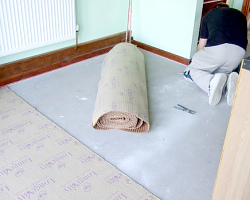
Not ones to rush, we’re finally getting some carpet fitted in the room we started renovating when we first bought this house last September.

Now this might be carpet sales person nonsense but all the guides we’ve read about choosing a carpet say that the carpet will last a lot longer and wear better if you replace the underlay at the same time. The underlay in the room in question is a very good make apparently but judging by the carpet, has been there for at least 20 years. The old carpet is clearly worn along certain paths and we’re guessing even though it’s harder to see it, the underlay is similarly worn – so we’ve listened to the advice and are replacing it.

Now of course that means we know have both carpet and carpet underlay to get rid of – doubling the amount of stuff to reuse or recycle.

We’ve already covered old carpet in the past and I will certainly keep some of the carpet for those reuses – insulating the floor of our greenhouse for one, and I think some of the carpet might be suitable for making into doormats etc. But what can I do with the underlay?

This is a lot thicker and floppier than the stuff used under wooden or laminate floors. I’m tempted to say it’s foam rubber but I’m not sure it is, and I can’t find out any more about it online, other than it uses “advanced polymers”.

Any suggestions? And any advice on whether the “you have to get new underlay” thing is true or bunk?

(Photo by Haxxah and KraZug)
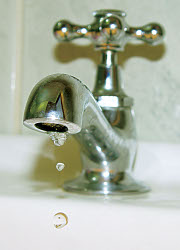

Reducing, reusing & recycling water – super green super tips!

Following on from yesterday’s watery post, green blogger Crunchy Chicken has proposed a “Dry Humps” (as in camels) challenge for one weekend next month. She states that the average American individual uses between 100 – 176 gallons of water a day, whereas an average *family* in an African country only uses 5 gallons of water.

The Crunchy one’s challenge is for people to cut down to 5 gallons a day (per person) for the weekend of the 12th & 13th June. Five gallons is 22.7ltrs, and as a guide, an average bath tub holds about 40gallons/150ltrs, and each toilet flush uses between 1.6gallons/6ltrs and 3.4gallons/13ltrs depending on whether it’s a new-fangled or old fashioned sort. So five gallons/22.7ltrs, per day, per person for a weekend really isn’t that much to live on – so quite an extreme challenge for us decadent water wasters, particularly at the height of summer.

A number of people who are taking up the challenge have wondered aloud how they’ll do it and another set of people have said the challenge is too extreme for them but they’d like to cut down their water usage over permanently – so I thought it might be a fun idea to brainstorm some dark green super tips – or bright green water saving gadgets or ideas.

We – the people switched on enough to read green websites – all know we should turn off the tap when we’re cleaning our teeth and to fill our washing machines rather than running them on water-wasting half loads. They’re the equivalent of “put on a jumper before turning on the heating” ideas for reducing heating bills/usage. But what are your favourite water saving hints and suggestions?

Do you have any gadgets to reduce water flow? Has a pay-for-what-you-use water meter helped keep you focused?

Do you use grey water (from baths, showers, washing machines etc) or stored rainwater to do anything fun? Have you hooked up any systems to automatically do that?

What about in the garden? It’s getting warm out there now and I don’t know about you but my veggies are gulping it down already. Do you do anything in particular to make sure you’re using what you need but not being wasteful?

And what about in the workplace? Have you encouraged your colleagues to cut down? Or seen any great water saving ideas in industry?

Any other ideas?


Awesome reducing, reusing & recycling links

Here’s this week’s awesome reducing, reusing & recycling links round-up:

How can I reuse or recycle hot tub water?

We’ve had an email from Linda:

i want to use the water from my hot tub on the garden, it is a great waste to just put it down the drain. the water has chlorine in it.

if i drain the water into water butts, is there any way i can remove the chlorine from it to make it safe to water my garden?

This isn’t something I know a lot about – I know people use filters to remove the chlorine from tap water but that’s in a lot lower and smaller quantities than a hot tub.

So anyone with more watery experience got any ideas?

(Photo by allygirl520)


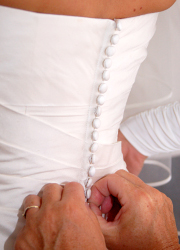
How can I stain my wedding dress?

I got an email with the above subject line and assuming it was spam, braced myself for a rude message – but in fact it was a genuine reusing/upcycling question from Valerie:



i am getting married again, but because it is my second marriage, i don’t want to spend a lot of money all over again.

i still have the gown i wore for my first wedding, a couple of years back (not outdated yet!), which i love, but i wouldn’t wear it white again…can i stain it? to make it cream or just not white?

i read something about tea staining, but i would need to use a tub to evenly stain it, which i don’t have…suggestions?

My first thought whenever anyone asks about staining/dyeing old clothes is always: what fabric is it? Natural fabrics dye a lot better and lot more evenly than synthetic ones. If you’re not sure what fabric it is – well, even if you are sure, it would be worth doing a swatch test on a hidden layer to check out how well the stain will take and what it’ll look like.

(For those interested in natural dyes, I’d recommend the Pioneer Thinking guide to plant dyes – what to use to get different colours and what to use as fixes.)

Any other advice? and what about tub suggestions/advice? I’m not an expert dyer but I believe you have to be careful using some metal pots (especially aluminium) – is plastic to be avoided too? Valerie seems happy with the design but any other upcycling advice?

(Photo by trudyloos)