 Bee has asked:
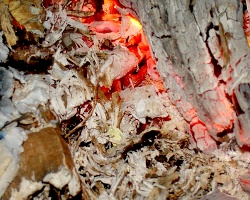
What can I do with a lot of wood ash after it has been leached? I have a large firepit, and I plan on saving and leaching the ashes… but I’m very leery about tossing that much slag ash onto the compost heap. I’ve found lots of info about ashes before leaching, but practically nothing about after leaching.
Funnily enough, I was riddling our woodburner and thinking about recycling ash just before I spotted this question from Bee :)
We’ve already covered the various different ways to reuse wood ash – from unpainted/unvarnished wood – in the garden and beyond — and one of those ways is to use it to make lye, which is what Bee is talking about here: the wood ash left after it’s been steeped to make lye for soapmaking or what-have-you.
I haven’t made lye myself – we just compost the ash – and like Bee, my Google-fu has failed me. I can find lots of tutorials on how-to make lye from wood ash but they all just skip from making the lye solution to using the lye, without explaining the clean up.
So does anyone know if the leftover ash is suitable for composting? I suspect it would be fine to go on a well-balanced compost heap – when “raw” wood ash is composted, the lye & salts leach away into the compost over time and the resulting compost will be alkaline but not too caustic to burn plants. The leaching process will have removed a lot of the lye so in theory it shouldn’t damage your heap – although equally, there is less point in it being there because it contains less minerals than “raw” wood ash – better than being thrown into landfill but not going to add a lot of goodies to the garden. That’s what I think anyway, from looking at the situation now — I am very happy to be contradicted by someone who has had experience of composting it.
Is there anything else that can be done with it? What would our ancestors – who wasted so very little – have done with it?
Categories: garden, household, items
Posted by louisa
on 16 January 2012
 We’ve had an email from Mark:
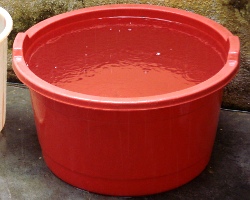
What is the best way to recycle small quantities of hot water from a condenser tumble dryer?
I know i could pour it down the toilet, put it on the garden etc, but what are the economical benefits of reusing this clean water. Can it be used (when cold) for anything beneficial? Recycled/redirected to a dishwasher etc
In yet another of those great-minds moments on here, I’ve been thinking a similar thing lately – we’ve had a dehumidifier running in our office after a series of leaks over the summer and while it’s thankfully slowed down a lot of late, we’ve had bucket upon bucket of water from it over the last few months. For me it’s less about the “economical benefits” and more about hating throwing anything away that might be useful.
Wikipedia describes this type of water as “a rather clean kind of greywater” – but various articles online advise against drinking it/letting animals drink it (because of possible bacterial/fungal spore/heavy metals contamination, and also because it’s been distilled & will taste weird). Watering well-established houseplants with it is probably ok – actually better than tap water if you’re tap water is very soft – although because of the possible bacterial/heavy metals issue, it’s still probably better to avoid using it on vegetables, particularly leafy ones.
Mark mentioned putting it down the toilet – I’m not sure whether he means just to get rid of it or in lieu of flushing. The latter will have an “economical benefit” if your water is metered — toilet flushing accounts for a huge proportion of most people’s water usage: just keep a bucket of water next to the toilet and pour some into the bowl to flush it. I’m not a water expert but based on the advice about possible contamination, I’d probably be more inclined to use it for clothes washing than dish washing (although it would probably be fine for that too, especially at hotter cycles).
Anyone have any experience reusing water from condenser dryers, air con units or dehumidifiers? What do you use greywater for around your home/garden?
Categories: items, water
Posted by louisa
on 9 January 2012
(I still need more inspiration for green new year’s resolutions or green goals for 2012. I think I’m probably going to end up doing 12 small things – one a month – rather than one big thing over the year — and I need ideas! But for now, back to regular scheduled “how can I recycle this?”ing :) )
 Bettina has asked:
How can I reuse cookie cutters? Other than as soap molds.
First things first, it has to be said: do consider passing them on if they’re still in usable condition so other people don’t have to buy new. Charity/thrift/op shops will probably take them to sell on, as would many schools/community groups for use during bulk cooking sessions for special events.
Now some onto reusing/upcycling ideas: just yesterday I saw someone using little cookie cutters that they’d got in Christmas crackers (& the like) for cutting out salt dough buttons and cute pedants/jewellery – I guess that’s not really that different to the original biscuit cutting idea but is a crafty rather than culinary angle.
Decent size metal cookie cutters can be used to shape fried eggs – stop them from stretching out right across the pan. We’ve got a round one that’s standard English muffin size so we can have round, deep fried egg muffins for breakfast – yum! (Warning: they do get hot while frying! They cool down quite quickly once off the heat but take care if you try this!).
Moving away from the kitchen, some people hang or mount them for decorative purposes – obviously ones more interesting than just round or just square work best for that (for example, snowman or star shaped ones for Christmas decorations, or hearts for Valentine’s or even all year around ones in romantic households ;) ) – but those simple round/square shapes could be used as little box frames for tiny pieces of artwork/special items. If you want to upcycle them to match your decor or if they’re discoloured, you could paint them with paint suitable for metals (enamel paint?)
Or you/kids could use them as stamps for painting.
Any other ideas for ways to reuse them?
(Photo by schleicher)
Categories: items, kitchen
Posted by louisa
on 6 January 2012
 I hope everyone has had a cracking start to 2012. I feel a bit bogged down catching up on everything leftover from 2011 but other than that, it’s been good!
One of the things I’ve been struggling over all week has been my first Recycle This post of 2012. At this time of year, I usually set myself a green goal or two for the year – and invite everyone else to set one as well. Something that, with a bit of focus during the year ahead, will become a lifelong reducing, reusing or recycling habit.
In 2010, I wanted to curb my addiction to cheap clothes – it took a while and an additional quota-based challenge in 2011 but I think I’ve cracked it now. Last year, I aimed to reduced the amount of food waste & food packaging waste we generated and while we haven’t been perfect in that regard, I think things have improved a lot.
This year though I can’t think of anything that feels like such an obvious crunch point for me/us. We’re not perfect by any means and are still working on improving our habits in a number of different areas but nothing feels like it’s an obvious “we really need to do that to be greener” thing this year.
I suspect it’s partly because we’ve been at this for a while now, have addressed the low hanging fruit and now I’m being blind/have rationalised away our biggest problems areas. I’m going to think very careful about that sort of thing for inspiration over the next few days but while I’m doing that, I’m asking for a bit of inspiration: what are you guys planning to do (or not do!) to make your life greener in 2012?
Categories: news
Posted by louisa
on 5 January 2012
So much stuff comes into our houses in the last two months of the year – presents, new clothes for parties and all sorts of decorations & whatnot – and after such a busy period, it’s all to easy to tuck it all to the back of the cupboard to consider mañana. But now is the perfect time to declutter – to pass on, to let others reuse or recycle – stuff.
Why?
1. So you don’t forget about the things – or get blind to them
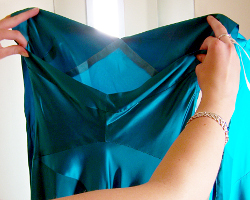 It’s so easy to forget about things once they’re tucked away in a cupboard – the scratty tinsel, the old electronic device that’s been replaced, the party dress you won’t probably wear again until next Christmas when it might be outdated or not fit… We’re terrible at putting things on a shelf “just in case” then not only forgetting them but getting blind to the fact they’re unwanted – if we didn’t want them, why have we kept them so long? – or even there (I get to the point where I just look through rather than at clutter around the place).
2. Charity shops are often low on stock
This was apparently a particularly serious problem last year with the bad weather – charity shops saw donations drop by nearly a third year-on-year – but every year, they see an understandable drop in donations in November & December compared to the rest of the year. Help them fill back up again!
3. To catch people while they’re still thinking about Christmas
 This is particularly important for Christmas decorations or other themed items. I know a lot of people who buy their Christmas wrapping paper, cards and novelty gifts in the previous year’s January sales – saves a lot of money. Fresh off the back of Christmas, people remember how expensive it is and think ahead to minimise the issue the following year. By May or June though, last Christmas is a long distant memory and next Christmas is still an eon away – and people will be less interested. Now though, people will stash your spare goodies away along with their own Christmas stash.
4. To let other people get full use out of something
Electronics, DVDs and fashion etc are all relatively time-sensitive things and if they get left on a shelf, they’ll become increasingly obsolete the longer they wait up there. I kept hold of lots of pre-recorded VHSes “just in case” then found it nearly impossible to give them away. The batteries in electronics die – or often refuse to charge again if left “empty” for long enough. Much better for someone else to get some use out of them instead!
5. To stop someone else having to buy new-new
 This is the ultimate reason we pass stuff on – so our items don’t end up in landfill and someone else doesn’t have to buy a brand new product that has been made with brand new resources.
How to pass stuff on
- Your local Freecycle/Freegle group
- Charity shops/op shops/thrift shops
- Swishing parties – for clothes & accessories mostly but if you’re running it, you can set the terms depending on your friends
- Sell it via eBay or a specialist site/event such as NCT’s Nearly New events
- Recycling banks for clothes & shoes at supermarkets
- Re-gift — but only if you’re sure the person will like it more than you or you’re just passing on the problem!
Have you got Christmas stuff or presents that you think should go? How will you be getting rid of them?
Categories: Christmas
Posted by louisa
on 29 December 2011