Archive for the "kitchen" category

How can I reuse, recycle or upcycle biscuit/cookie cutters?

(I still need more inspiration for green new year’s resolutions or green goals for 2012. I think I’m probably going to end up doing 12 small things – one a month – rather than one big thing over the year — and I need ideas! But for now, back to regular scheduled “how can I recycle this?”ing :) )

Bettina has asked:

How can I reuse cookie cutters? Other than as soap molds.

First things first, it has to be said: do consider passing them on if they’re still in usable condition so other people don’t have to buy new. Charity/thrift/op shops will probably take them to sell on, as would many schools/community groups for use during bulk cooking sessions for special events.

Now some onto reusing/upcycling ideas: just yesterday I saw someone using little cookie cutters that they’d got in Christmas crackers (& the like) for cutting out salt dough buttons and cute pedants/jewellery – I guess that’s not really that different to the original biscuit cutting idea but is a crafty rather than culinary angle.

Decent size metal cookie cutters can be used to shape fried eggs – stop them from stretching out right across the pan. We’ve got a round one that’s standard English muffin size so we can have round, deep fried egg muffins for breakfast – yum! (Warning: they do get hot while frying! They cool down quite quickly once off the heat but take care if you try this!).

Moving away from the kitchen, some people hang or mount them for decorative purposes – obviously ones more interesting than just round or just square work best for that (for example, snowman or star shaped ones for Christmas decorations, or hearts for Valentine’s or even all year around ones in romantic households ;) ) – but those simple round/square shapes could be used as little box frames for tiny pieces of artwork/special items. If you want to upcycle them to match your decor or if they’re discoloured, you could paint them with paint suitable for metals (enamel paint?)

Or you/kids could use them as stamps for painting.

Any other ideas for ways to reuse them?

(Photo by schleicher)


5 fantastic things to do with old cutlery/silverware

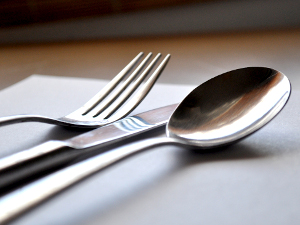
Last week’s post about those little plastic spoons you get with children’s medicine reminded me of all the great things you can do with old metal cutlery – not the finest family silver necessarily but the stuff that manages to find its way into your cutlery drawer (or conversely – the remains that are left after everything else leaves and you get a new set!).

1. Reuse them around the home

Our cats have a dedicated old fork for their food; I have an old dessert spoon with a handle bent up at 90° for skimming misc and oil from the top of sauces; and, I have an old tablespoon in with my laundry stuff for spooning in wash boosters.

In our tool kit, we have a fork which can be used for holding nails in place while hammering, a(n admittedly more flexible than most) old butter knife for smoothing filler and several old spoons for stirring filler, paint and whatnot.

What do you reuse them for around the home?

2. Reuse them around the garden

They’re almost equally as useful in the garden too!

Forks are useful when transplanting seedlings – use them to lift the plant’s tender new roots out of their starter tray – and can also be used to temporarily pin thin runners in place if you want, for example, strawberries, to spread in a certain direction.

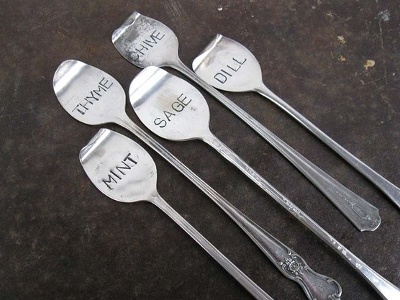
Knives and spoons also make fun row markers or plant labels in pots. Some people (like dkshattuck, who made the ones above) sell ready made sets for herbs , stamped with the names or otherwise labelled so they’ll last for years and years.

Do you use old cutlery in the garden? If so, what for?

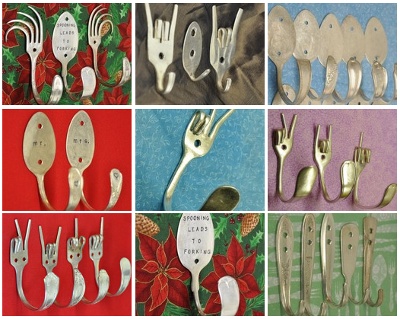
3. Coat hooks and cupboard handles

Sturdy cutlery can be bent into fun coat hooks or key hooks like those pictured above. They’re by Jeremy and Jen Evensen, who sell via Etsy – such fun designs!
Continue Reading →


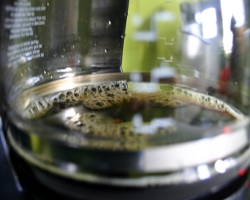
How can I reuse coffee that’s sat on the plate for too long?

We’ve had an email from Iris:
We make a big jug of filter coffee each morning at the weekend but I regularly have to pour away the last cup or two away because it’s gone bitter. Is there anything I can do to revive it or use it up some other way?

Of course, there is an obvious “reduce” angle here: just don’t make so much. If that’s not an option for some reason or if you still end up with dregs, as a minimum, the coffee (along with the grounds and the filter, if it’s paper/cotton) should be going on the compost heap rather than down the drain – but that’s a last resort. Some plants that like acidic soils might also like to down your last cup of joe once a week too (although watered down if it’s got a bit strong on the hot plate, and it’s had too much if the leaves start to yellow or go brown after a few weeks).

I don’t drink coffee but do use it in cakes/desserts from time to time. I usually get my brewmaster (boyfriend) to prepare a fresh cup for me to use though as he makes (Aeropress) espresso and we don’t have “spare” coffee. I’d imagine that any burnt taste in the coffee would be transferred to the cake/mousse etc too – but I don’t know, perhaps the other ingredients would mask it — anyone tried that?

Any other suggestions for ways for Iris to use up that bitter coffee?


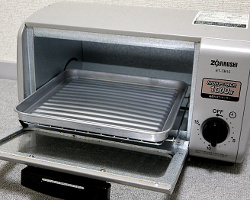
How can I recycled/pass on an old, working electric oven?

We’ve had an email from Richard:

We have 4-year-old electric oven in good working order which we would like to donate to a Charity. Any ideas?

We’ll actually in a similar position soon – our (15+ year old) oven works for general cooking but not for the precise/high temperatures we need from it for baking etc, so we’ll be getting a new one in the new year.

It might be hard to find a charity that would accept an oven – due to both its size and for safety reasons. Our plan was to offer it on Freecycle/Freegle, or via our local Gumtree (we’ve had more success with the latter) – passing it directly on to someone who could use it rather than going through a charity.

If you definitely want to pass it through a charity though, my only suggestion would be checking with any local charities that provide furniture or household items for people moving on from homelessness or other precarious situations. I don’t know if they’d take it but Emmaus train formerly homeless people to test & refurbish household items before selling them on, so they might be in a position to take, test and pass it/sell it on.

Does anyone else have any other suggestions for how it can be passed on?

(Photo by MrDeeds


How can I reuse or recycle an hand coffee mill/grinder?

We’ve had an email from good friend of Recycle This Petra:

When cleaning some cupboards, I found an old hand coffee mill. I never use it for coffee beans, but could you think of another purpose for this mill. Something to grind for kitchen use? Or something totally different?

All ideas are welcome.

My ex had a very basic hand grinder for coffee and it took *forever* to grind enough beans for a single cup of coffee so if it’s anything like that one, I wouldn’t advocate using it to grind any large quantities of things or anything that needs to be very fine. I suspect more modern/expensive grinders are more efficient though and probably give more control over the final ground size – I’ve never tried it but could they be used for making rice flour or chickpea (gram) flour?

(If you’re not going to make use of it, the usual “pass it on” rule & routes apply: someone might want it for grinding coffee. I regularly see this type of thing on the “household” shelves of local charity/thrift shops or at car boot sales etc – they’re often sold without original packaging/instructions as long as they’re in good, clean condition.)

Any other suggestions for things to grind in it aside from coffee? Or other reuses/recycling ideas?