


How can I reuse or recycle menstrual blood?
 In honour of International Women’s Day on Monday, we’re having a week of women’s & sexual health themed posts (and giveaways!!). Check out our older related posts too – such as unused disposable sanitary products or end-of-life menstrual cups.
I thought long and hard about whether to feature this because it’s the type of green action that makes Daily Mail readers exclaim “bloody hippies!!” and pledge to not reduce, reuse or recycle just to annoy us filthy, poor Good-Life-wannabes. But in the end, Cipollina’s comment yesterday convinced me – it’s not for everyone but blood is a cracking fertiliser.
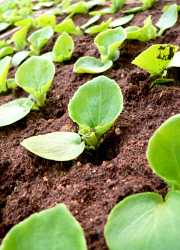
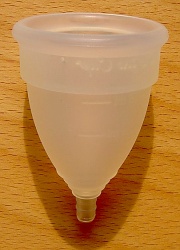
The fluid emptied out from your Mooncup or pink water from rinsing out from your washable sanitary towels is a great source of natural nitrogen – it replenishes overworked soil and feeds the plants. People buy blood meal — the dried & powdered blood from livestock — as a non-synthetic fertiliser but why not cut out the middle man/middle cow? It’s as organic as you are.
There are some potential problems with just pouring it straight on the garden – some blood-borne pathogens can be transferred around and apparently it can attract ants – but one way to minimise the risk of that sort of thing is to put it through a hot compost heap. If you know you have a blood-borne pathogen, you might want to look into the situation with your condition further – although apparently even hepatitis, one of the longest surviving blood-borne pathogens outside the body, only manages about 30 hours before breaking down (shorter if heated/exposed to sunlight).
I found two very interesting discussions on the topic – this one and this one – explaining about different people’s experiences and methods but I wonder if anyone has used it for anything a bit more out of the ordinary…
Thoughts? Ideas? Suggestions?










Here’s my personal take on these things.
They sell powdered blood (bones and horn, too) as fertilizers, and even artificial and not-so-artificial pee. Oh, and shit in pellets! But why cross the river to fetch our water when we can compost and use our own body wastes? In our own gardens?
Let’s not panic. It’s not the pathogens that represent the worst danger when using your own wastes in the garden – it’s all the chemicals, the hormones and shit we put in our foods, our supplements, and our medicines. If you’re on birth control, don’t do it. If you’re on stereoids, don’t do it. If you’re on antibiothics, don’t do it. These things won’t do *you* any harm, or you’d have noticed already, but may be devastating for your garden’s ecology, its flora & fauna.
Even with these possible risks at our doorsteps, there are worse things to be worried about. Much worse. Look up The Humanure Handbook on the net and search for a small piece – a little bullet list – titled “Pathogen Alert!”. No, the human body wastes and what they might contain aren’t what we need to be worried about at all. You’ll learn a lot from the rest of that book, too, by the way!
You know, put in perspective it’s actually pretty ridiculous to be worried about putting stuff in your own garden that you minutes before actually carried around *inside* your own body, don’t you think?
I’ve used my mooncup and pad blood for years on my garden and it noticably thrives more than my neighbours- she keeps asking what my secret is and i am too embrassed to say…so i just say i use blood and bone meal!
Actually, for the same reason human excrement can be dangerous. iT can harbor many dangerous bacteria, worm larva and such. They might eventually catch up with you or your family. However, so are the medicines we put in our bodies.
In ancient times all of the human discharge products were used to benefit plants, including female squirting fluid.
Put Your Menstrual Flow to Work with C’elle
C’elle is a new service from Cryo-Cell International, Inc., an Oldsmar, Florida umbilical cord blood banking firm, that promises to collect and store stem cells from a woman’s menstrual flow for possible future use.
Here’s what the firm says about its collection kit, delivered to your home by FedEx, and the possible benefits of the service:
Inside, you’ll find everything needed for you to collect and send your C’elle menstrual stem cells for processing and preservation, including a menstrual cup, collection tubes, prepaid FedEx airbill for return shipment to Cryo-Cell, and comprehensive instructions for use.
The new service, called C’ellesm (pronounced “C-L”), enables women to collect menstrual flow containing stem cells, which can be cryogenically preserved in a manner similar to stem cells from umbilical cord blood and may one day serve as a potential source for promising regenerative therapies to treat heart disease, diabetes, neurological disorders like spinal cord injury, Parkinson’s and Alzheimer’s diseases, in addition to cosmeceutical applications such as anti-aging therapies, to name a few. However, realistically, it may take several years for these menstrual stem cells to be developed into potential widely-available commercial therapies. The C’elle service is based on Cryo-Cell’s intellectual property, for which patent applications are pending, related to the procurement, processing, isolation and cryo-preservation of these unique menstrual stem cells.
The unique C’elle service is being offered following Cryo-Cell’s discovery of new scientific evidence that menstrual flow, which results from the shedding of the uterine lining (endometrium) during menstruation, contains millions of stem cells that have many properties and characteristics similar to those of both bone marrow and embryonic stem cells. Dr. Amit N. Patel, Director of Cardiac Stem Cell Therapies at the McGowan Institute, University of Pittsburgh Medical Center, along with other independent research laboratories, studied these menstrual stem cells, which have demonstrated the capability in vitro to differentiate into neural, cardiac, bone, cartilage, and adipose cells, and possibly other cell types. Dr. Patel’s preliminary findings were presented on October 21, 2007 at TCT 2007, the annual scientific symposia of Transcatheter Cardiovascular Therapeutics, in a seminar entitled “Novel Cell Sources for Myocyte Repair and Replacement”.
The service, and its potential but unproven benefits are already drawing criticisms from the experts. This doesn’t mean that such a business will not be a success: the same kind of criticism has been directed against umbilical cord stem cell collecting, but hundreds of thousands of customers chose to buy it anyway.
I used Celle’s service to get my menstrual blood usable and become Life saving for others.
The stem cells which are retrieved from isolated menstrual blood may possibly be utilized in the future potential treatment of debilitating diseases such as breast cancer, heart disease, diabetes, stroke and others.
So by the use of these stem cells you can save someone’s life.
So nice work keep it up.
You will get diseases. The body gets rid of this blood for a reason. It is of no use except for having babies. Nevermind saving a life you need to get a life you disgusting person.
if it is possible to recycle the mensuration blood. than it is good . the shortage of blood is not bein in future………. so plz. try to recycle it.
i think personally, its better to save it up and use it for gardening/research. used pads/tampons are just going to end up in landfill anyways.